Recorded Nov. 19, 2019; broadcast on Feb. 6, 2020.
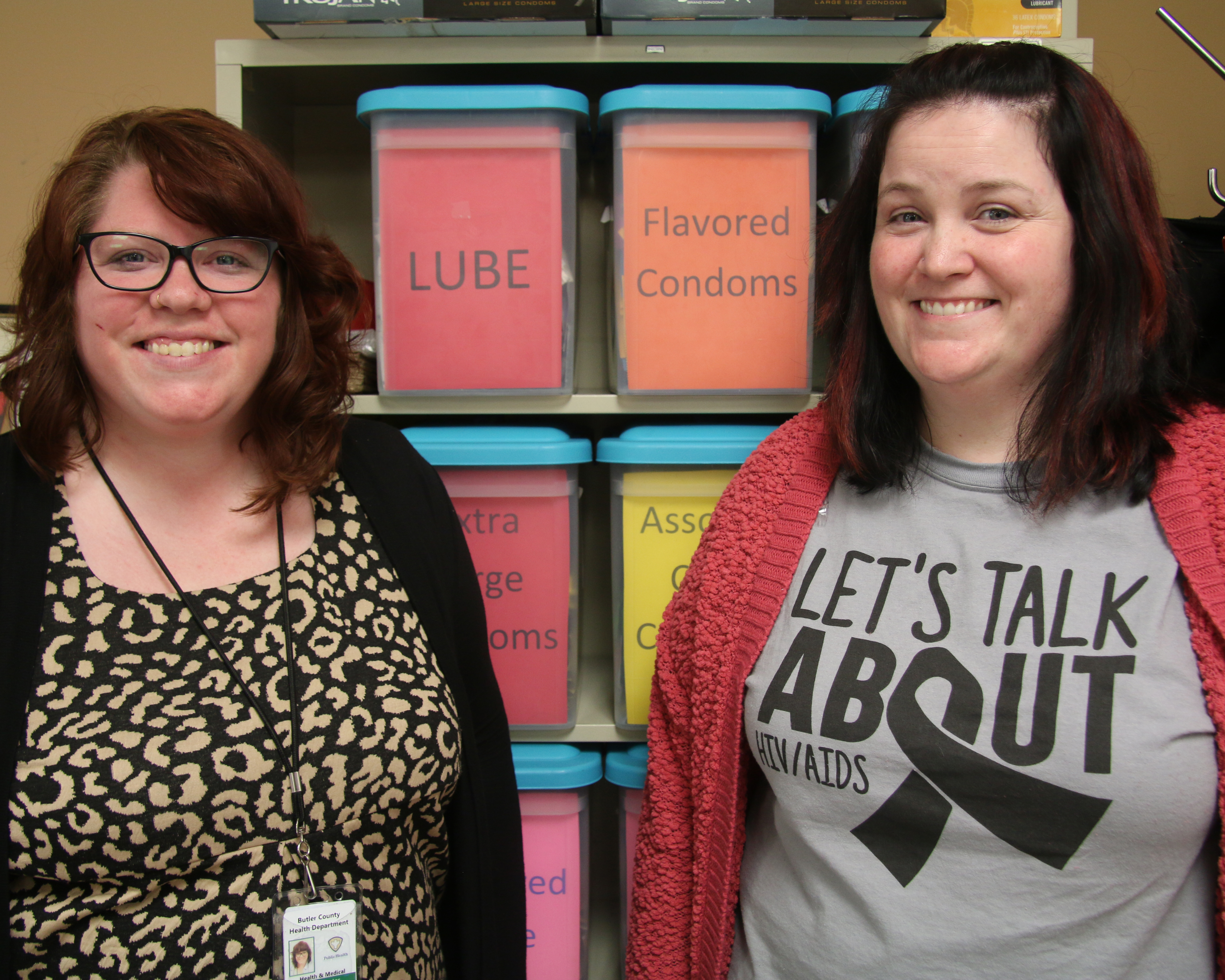
Catrina Huskey and Amanda Fitzwater both work at the Butler County Health Department in Poplar Bluff. Catrina is an HIV case manager and Amanda is a prevention specialist.
They spoke about some of the stigma around HIV that continues to exist in their community and about how that, sometimes, impacts access to medical care.
Region: Butler County
Related Issues: HIV Preventive Health Sex Education


Catrina Huskey: Anywhere you're gonna have misconceptions, like even in big cities, but I feel like it's worse here. Even when I started this job, I had family members that were nervous about me having a job working with folks with HIV because they just really didn't understand HIV, in general, or people with HIV.
I have actual family members that were nervous about me getting HIV when I was doing testing and things like that. We still face all of that stigma and no education here...
Amanda Fitzwater: Yeah, and I think, like when you're out there teaching on this stuff, and people start, like saying those bad things, or they're like, “Oh, you can get it from this.” I still hear, “Oh, I can get it from the toilet seat or drinking after someone.”
Sometimes I get a little aggravated because, you know, there's people who are living with HIV – they have to hear this, and if it's making me mad, I'm sure it's making them upset.
And so, like Catrina said, you know, when I first got this job, there was a lot of stigma, and people were like, “Oohhhh.”
So, I think the stigma in the rural communities –it's so big, and they just don't understand it. I always think “Well, the 80s was such a big scare for them.” I think it just keeps rolling into the newer generations really.
Catrina: And people also don't think that it affects them. People think that they don't know anyone that has HIV, but I promise you, you do and you just don't know it.
One thing I always think about is like – in the 80s, there was no medication, and then up until what, like 92? 94? There was no good medications – I think about all my people, we have close to 80 clients, and like how the medications affected them and made it so they could live longer, happier, healthier lives.
I mean, without that medication or access to that medication and healthcare, most of them wouldn't even be here.
Amanda: Yeah, and, I mean, we've had instances where we've seen someone, you know, go in for help in a medical facility and get misdiagnosed, and then he's so sick, he ends up dying.
I mean, it's those things that… the education is so important. I mean, that was such a terrible case that we seen. I mean, it was just heartbreaking.
Catrina: Yeah, it was the medical community [that] didn't even recognize the symptoms. A client had all the classic symptoms of HIV – had it for a long time and didn't know it – he went to the hospital three different times and was misdiagnosed.
Unfortunately, I don't think they cover a lot of that in nursing school, as much as they should. I think they go over it for a short time.
Amanda: But I think it's something that's so prevalent and so important, I mean, even if they're touching base on PrEP Pre-exposure prophylaxis]. I think that's a huge thing too that these nurses and doctors need to know about is PrEP.
What's sad is we've noticed that some doctors in our area – people who are well educated – don't think that HIV is in our area. I mean, we've seen that several times.
“It's not here. Why do I need to be testing for it?”
But it is.
Copyright 2017 KBIA and The University of Missouri. Development and Design by Nathan Lawrence.
